Recently, an article titled "Data-driven Collaborative Optimization of the Entire Discrete Manufacturing Process - Construction and Application of a Three-in-One Solution Based on the AIMS-MOS Manufacturing Operation Platform" signed by Zhong Zhimin, the chairman of AIMS, was published in the "Authoritative" column of the "Logistics Technology and Application" special issue on intelligent manufacturing. This journal is managed by the Ministry of Education and is hosted by Beijing University of Science and Technology. It is a national academic publication that is widely distributed domestically and internationally, and is also one of the earliest specialized platforms focusing on logistics system technology and application, enjoying extensive industry readership and academic influence.
The article focuses on the national-level platform demonstration project of "Supply Chain Collaboration Solution Based on Flexible Manufacturing Platform of Industrial Internet", and deeply elaborates on how the AIMS-MOS manufacturing operation platform achieves refined collaborative optimization of the entire process of discrete manufacturing through data-driven methods. It showcases its remarkable effects in enhancing manufacturing transparency, reducing operational costs, and responding quickly to market changes. This publication not only confirms the continuous innovation pursuit of AIMS in the field of intelligent manufacturing, but also provides the industry with replicable and easily-promoted digital transformation examples. Through practical actions, it truly fulfills the mission of "leading industry development and promoting industrial progress".
Abstract: In response to the pain points of digital transformation in the discrete manufacturing industry, this paper proposes a three-in-one solution based on the AIMS-MOS manufacturing operation platform. This solution integrates six core technologies such as multi-source heterogeneous data fusion and dynamic resource scheduling. By establishing a global data hub, reconfiguring a flexible logistics network, and establishing a cross-system collaboration mechanism, it forms a "perception-decision-execution" closed-loop management system. Taking a smart factory project of a certain Guangdong printing and packaging group as an example, the effectiveness of the data-driven model in solving the management problems of the discrete manufacturing industry is verified, providing a replicable technical path and practical paradigm for the industry.
Key words: Discrete Manufacturing; Real-time Perception; Intelligent Scheduling; Flexible Logistics; Collaborative Management; AIMS-MOS Manufacturing Operations Platform
Author: Zhong Zhimin
AIMS TECHNOLOGY CO.,LTD.
Under the waves of globalization and digitalization, emerging technologies such as information technology, artificial intelligence, and the Internet of Things have developed rapidly, bringing profound changes to discrete manufacturing industries (such as printing and packaging, clothing, electronics, etc.), and accelerating their transformation from labor-intensive to technology-intensive. The core feature of this transformation is the comprehensive penetration of intelligence, digitization, and networking. However, the inherent characteristics and problems of the discrete manufacturing industry pose severe challenges to its development, and it is urgent to achieve an upgrade in the entire process of collaborative management through digital transformation. This article analyzes the problems faced during the digital transformation of the discrete manufacturing industry and proposes a three-in-one solution based on the manufacturing operation platform (AIMS-MOS).
一. Urgency and Challenges of Digital Transformation in Discrete Manufacturing Industry
1.The urgency of digital transformation in the discrete manufacturing industry
The production process in discrete manufacturing is extremely complex, involving numerous procedures, small and scattered business orders, and a wide variety of materials. This leads to significant challenges in production management in areas such as material management, equipment management, personnel scheduling, production planning and scheduling, cost management, and business decision-making. Therefore, refined management has become an inevitable requirement. Otherwise, problems such as material shortages, equipment failures, and insufficient personnel will affect production efficiency and product quality, resulting in a large amount of resource waste.
The delivery schedules in the discrete manufacturing industry are tight, and the formulation and execution of production plans need to ensure timely fulfillment, which has become a pain point for enterprises. The production cycle involves multiple stages and requires detailed production plans; however, uncertainties often lead to plan changes, thereby affecting the production progress and customer delivery. This complexity makes it difficult for enterprises to remain agile in the fierce market competition.
The production costs in the discrete manufacturing industry are relatively high, and the profit margin is small. Enterprises are under significant operational pressure. The soaring costs of raw materials, equipment, and labor force force enterprises to often reduce their profit margins while maintaining competitiveness. This pressure increases the financial risks of enterprises and affects their long-term survival and development.
In the face of these challenges, discrete manufacturing enterprises urgently need to leverage the power of data-driven methods. Through key digitalization means such as "perception and decision-making - collaborative execution - monitoring and optimization", they can achieve the integration of intelligent logistics and manufacturing operations, and upgrade the overall collaborative management model.
2. Challenges in Digital Transformation of Discrete Manufacturing Industry
(1) Data islands: Decision-making "blind man and Elephant"
The production process in the discrete manufacturing industry is highly complex, and the process parameters in the PLM system, the real-time production data provided by the MES, and the material inventory data in the ERP system are like scattered pieces of a puzzle that are difficult to fit together. This fragmentation directly leads to the management team relying on the "intuitive experience" of the workshop director when assessing the risk of order delivery. What's more worrying is that key data such as equipment status and storage location information still need to be manually entered. The broken data chain has caused the on-time delivery rate of the enterprise to remain at 50% to 60% for a long time, and each capacity assessment is like groping in the fog.
(2) Resource Mismatch: The "Invisible Black Hole" of Efficiency
In the production process of the discrete manufacturing industry, a large amount of materials, equipment and space resources are involved. However, under the traditional "push-type" production mode, the dynamic coordination mechanism of these resources has failed to be effectively established, resulting in serious resource mismatch problems, which have become a "hidden black hole" that reduces production efficiency.
In terms of material management, due to the lack of real-time material demand information and effective inventory management mechanisms, there are often situations where the supply of materials does not match the demand. For instance, some production equipment stops operating due to a shortage of materials, while the same type of raw materials are piled up in overdue storage locations in the line-side warehouse. Behind this contradictory phenomenon, a deeper collaborative dilemma is exposed. For example, although an enterprise has expanded the warehouse with the designed capacity of 4000 to 9000, it still frequently explods the warehouse, and 10% of the ultra-long storage age inventory is like a silent cost eater. The overall efficiency (OEE) of equipment worth tens of millions is only 30%, and the maintenance team is exhausted during unplanned downtime.
What is even more serious is that the situation where semi-finished products are piled up and blocking the fire escape routes occurs every week. The loss of site productivity has reached twice the industry average.
3) Disconnection in collaboration: The "pain of deficiency" of flexibility
The discrete manufacturing industry is confronted with the demand for a wide variety of products in small quantities. This places extremely high demands on the production collaboration capabilities of such enterprises. However, in the actual production process, the disconnection among various departments within the enterprises is extremely serious, becoming a "missing pain" that hinders the flexible production capacity.
The production planning department frequently encounters changes in customer orders. Due to the lack of an effective collaborative mechanism, plan changes require a significant amount of manual coordination time to rebalance the loads of processes such as paper cutting, printing, and die-cutting. For instance, the red markings indicating the changes in the production plan for a certain enterprise have covered 60% of the orders. The temporary additional orders from customers often require two hours of manual coordination to rebalance the loads of each process.
On the production line, the utilization rate of automated equipment is relatively low. The usage rate of AGV logistics vehicles in a certain enterprise is less than 40% of the designed value. Workers still use paper documents to manually request materials. When quality inspection discovers printing issues, abnormal information needs to be reported layer by layer, and the adjustment of process parameters often lags by more than half a day. This process delay becomes particularly obvious when dealing with multi-variety and small-batch orders. The response to urgent orders is slow, which directly leads to the loss of important customers for the enterprise.
II. Establishing a "Three-in-One" Collaborative Solution
In response to the pain points of digital transformation in the discrete manufacturing industry, AIMS has developed and launched a "three-in-one" collaborative solution, covering three aspects: data-driven, logistics reconstruction, and collaborative evolution.
1. Data-driven: Building a digital decision-making hub
AIMS, based on the AIMS-MOS manufacturing operation platform, initiates a profound transformation in data governance.
In the monitoring scenario of production conditions, by deploying iDTU intelligent data terminals at key machine node locations, multiple sources of signals such as current, voltage, vibration, and noise from the machines can be freely collected. At the same time, real-time vibration data from the PLC controller, the material trajectory recorded by RFID tags, and quality characteristics captured by the visual inspection system are all directly integrated into the unified data lake through the edge computing gateway in real time.
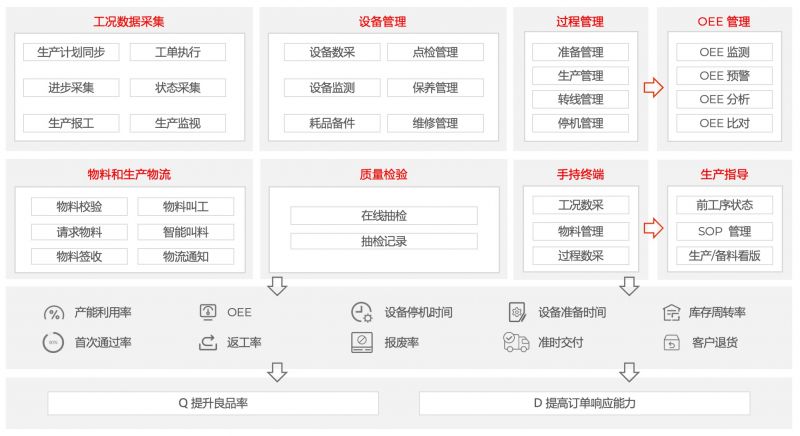
In the process of breaking down the barriers of PLM systems, MES systems and ERP systems, the technical team built a "unified material coding" system and applied it to the Internet of Things and information systems to achieve dynamic mapping of massive data in historical systems.
When the multivariate time series anomaly detection algorithm based on LSTM was introduced on this data lake to conduct in-depth analysis of the three-year equipment maintenance records, the model inputted 4-dimensional sequences including current, voltage, vibration acceleration and noise intensity. Unexpectedly, it was found that the bearing failure of a certain type of die-cutting machine followed a periodic pattern, which increased the accuracy of predictive maintenance to 85%.
What is even more groundbreaking is that in the scenario of order delivery risk assessment, after the sales team inputs customer requirements, the system, based on the Monte Carlo simulation algorithm, conducts distributed sampling on factors such as raw material arrival delay, human availability, equipment capacity, transportation resources, and storage capacity. It completes multi-dimensional simulations of raw material risks, human risks, equipment capacity risks, delivery time risks, transportation capacity risks, and storage capacity risks within 20 seconds. Additionally, by combining the historical expert knowledge base, it generates targeted decision-making suggestions for various risks through the AI recommendation algorithm.
Meanwhile, the iDTU intelligent data terminal independently developed by AIMS is an integrated data collection and transmission device, mainly used for real-time collection, processing, storage, and transmission of various types of signals (such as analog quantities, digital quantities, temperature, pressure, etc.) from sensors, instruments, or industrial equipment. Its core function is to convert physical signals into digital signals and transmit them through the network or local interface to the monitoring system or cloud platform. It achieves multi-source heterogeneous data fusion: The new generation of data acquisition products support parallel collection of multiple data sources, including 23 types of data sources such as APIs, IoT sensors, log files, etc. For example, the data access module can automatically parse non-structured data such as PDF forms and image recognition, increasing data preparation efficiency by 85%. The data acquisition box realizes multi-source heterogeneous data collection through IoT technology, supports comprehensive integration of digital workshops, and drives departmental business collaboration and deep integration of various applications. The error rate of sensitive field data collection has decreased from 2.7% to 0.03%; through the intelligent inspection system, 132 types of abnormal scenarios such as network fluctuations and interface changes can be automatically identified. Real-time streaming processing: Through streaming processing frameworks such as Kafka and Flink, data latency is controlled at the millisecond level. Real-time analysis dashboards can synchronously present collected data, and an e-commerce platform has thus increased the effectiveness evaluation of promotional activities to a minute-level response.
2. Logistics Reconstruction: Activating the lifeline of materials
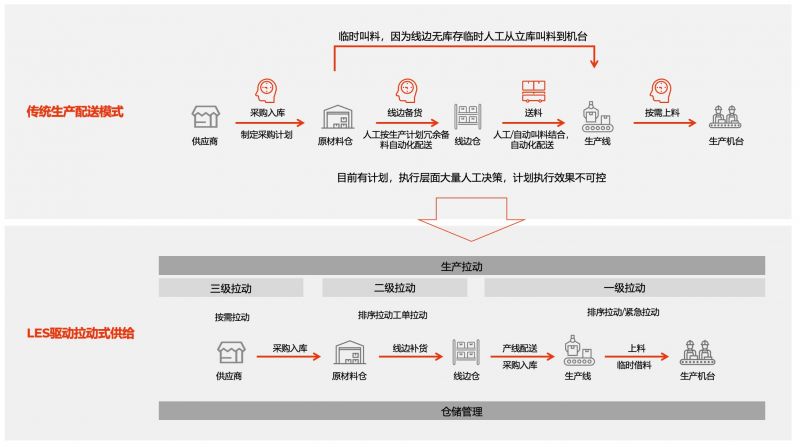
Through the construction of an intelligent logistics system, the logistics efficiency has been significantly improved. For example, in the newly built automated warehouse, 32-meter-high shelves increase the storage density to 4.2 times that of traditional warehouses through a double-cycle stacker system. When the WMS system detects that the corrugated cardboard inventory in the line-side warehouse is below the safety threshold, the AGV scheduling system will plan the optimal replenishment path within 0.3 seconds. Even more ingeniously, the LES logistics execution system deeply couples the production cycle with the delivery frequency. During the production of urgent orders for customers, the material supply achieves "zero waiting" connection. These changes have compressed the turnover cycle of line-side inventory from 24 hours to 6.8 hours, and the equipment shortage downtime has decreased by 72%.
3. The collaborative evolution: reshaping organization genes
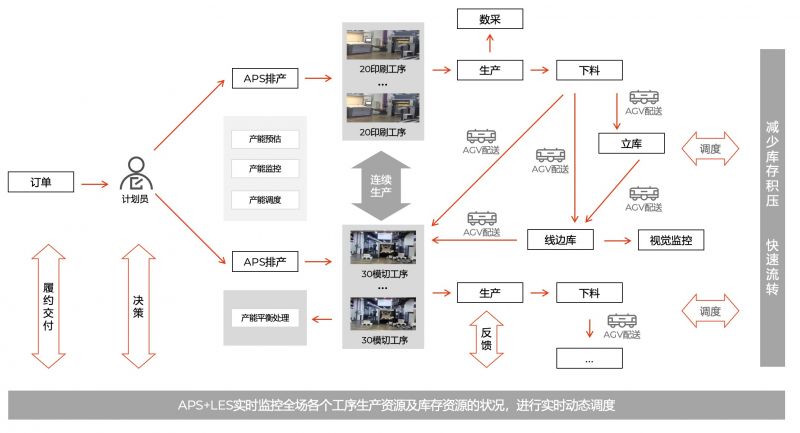
In the digital workshop command center, the APS advanced planning and scheduling system works in conjunction with the JIT control tower system to achieve real-time end-to-end monitoring of production.
When a printing machine experiences a sudden malfunction, the reinforcement learning algorithm will rebalance the production loads of the four workshops within 43 seconds and simultaneously send the adjustment instructions to 12 related positions. This rapid response capability stems from the "digital process hub" established by the enterprise. — MES can automatically issue over 3,000 combinations of process parameters, reducing the machine setup time from an average of 45 minutes to just 8 minutes. More strategically, the purchasing department has established a data sharing channel with core suppliers. Behind the 31% increase in raw material turnover rate is the real-time and transparent production capacity data driving just-in-time collaboration. Once the purchasing order is confirmed, APS completes the production scheduling within minutes, WMS locks the inventory within 100 milliseconds and synchronizes the purchasing requirements to the ERP system. After the purchasing plan is issued, the transportation plan and warehouse capacity plan are updated and locked simultaneously. When the production director examines the operation status of the workshop through the 3D digital twin system, when the quality engineer calls the blockchain traceability data to locate the problem batches, and when the customer views the real-time production trajectory of the order on the mobile terminal -
The "three in one" collaborative solution significantly enhances the efficiency of enterprises and redefines the decision-making model of the organization. When the production director uses the three-dimensional digital twin system to observe the operation status of the workshop, when the quality engineer calls upon the blockchain traceability data to locate the problematic batches, and when customers view the real-time production trajectory of orders on their mobile devices - — These scenarios demonstrate the true value of digital transformation: the integration of data, logistics, and collaboration is creating a new ecosystem for discrete manufacturing.
III. Technical Dissection of the AIMS-MOS Manufacturing and Operations Platform
As the base of the "three-in-one" collaborative system, the AIMS-MOS manufacturing operation platform has a number of key technologies, providing a solid support for the digital transformation of enterprises.
Multi-source heterogeneous data fusion technology
Based on the unified device access and protocol decoupling layer, a standardized data fusion system for industrial devices of multiple brands, multiple protocols, and multiple models is constructed. By defining the device object model, the control instructions and data formats of different communication protocols (such as Modbus, OPC UA, EtherCAT, etc.) are abstracted and encapsulated, enabling "plug-and-play" access of heterogeneous devices such as robots, AGVs, and stacker cranes. Distributed data acquisition technology is adopted to support device status refresh within milliseconds, and multiple source data streams from sensors, business systems (MES/WMS), etc. are integrated to form a global real-time data pool. The driver management mechanism is used to dynamically adapt to the differences in device protocols, eliminating data islands and providing highly consistent data support for the upper-level scheduling.
2. Dynamic Resource Scheduling Optimization Algorithm
Relying on the spatiotemporal intelligent decision-making engine, we innovatively integrate multi-objective optimization algorithms with real-time scheduling technology. The core technologies include:
Path planning algorithm: Time-window-based dynamic path planning, static shortest path algorithm, supporting multi-machine collaboration and obstacle avoidance for AGV/RGV.
Resource matching model: Utilize genetic algorithms to optimize the efficiency of equipment-task matching, and combine the warehouse particle swarm scheduling algorithm to achieve the synergy between storage positions and logistics routes.
Conflict resolution mechanism: Through a hierarchical parallel computing framework, the analysis of the device motion model, the assessment of scene congestion degree, and the prioritization process are completed within a few seconds, achieving 99.5% conflict-free scheduling.
This engine supports concurrent processing of over a thousand tasks per second, reducing the rate of production line congestion and compressing the abnormal response time to less than 200 milliseconds.
3. Cross-system Data Governance Standard System
Build a three-layer standardized architecture to achieve cross-system data governance:
Interface standard layer: Establish a unified API specification, open up data interaction channels among various business systems such as MES/ERP/WMS, and reduce data latency to the millisecond level.
Semantic Model Layer: Establish a universal data dictionary for fields such as equipment, processes, and logistics, and achieve semantic consistency parsing across systems.
Security governance layer: Through data classification authorization and encrypted transmission mechanisms, ensure the security of industrial site data throughout its entire lifecycle.
This system supports the conversion of over 20 types of industrial protocols, enabling a comprehensive data governance capability covering device control instructions, production status, and quality parameters.
4. Resource scheduling and underlying control capabilities for industrial sites
Achieving cross-system data governance: Equipped with an industrial-grade scheduling kernel, it has the ability to uniformly model, dynamically schedule, and manage conflicts for both physical resources (such as AGVs, robots, stacker cranes, sensors, etc.) and logical resources (tasks, work orders, paths, etc.).
By abstractly encapsulating the hardware through the driver adaptation layer, device-level instructions can be issued and feedback obtained on a unified model, truly constructing a "software and hardware integrated" execution control platform.
Unified coordination and scheduling of personnel and automated equipment throughout the park, warehouse and workshop.
5. Low-code development tools
Build a visual process orchestration platform to break through the barriers of traditional industrial software development, mainly including:
Build a visual process orchestration platform to break through the barriers of traditional industrial software development, mainly including:
Drag-and-drop logical arrangement: Supports multiple modes of business modeling such as flowcharts and state machines, reducing the development cycle to one-third of the traditional mode.
Open API ecosystem: Offers RESTful interfaces and SDK toolkits to achieve seamless integration with existing systems.
This tool has enabled the rapid deployment of over 20 industrial apps, and has significantly improved the efficiency of launching new functions in the printing and packaging industry.
6. Full-scenario Digital Twin
Build a digital twin system that integrates virtual and real elements, covering the entire life cycle of the factory.
Supports the simulation of multiple protocols and various devices.
Integrate CAD drawings with real-time IoT data to build high-precision models and map them to the physical world.
Support simulation of various scenarios such as production capacity planning, process changes, and equipment failures.
Verify the feasibility of the solution through full-scenario simulation and calculate the overall operational performance to ensure the solution can be implemented.
The above six technologies are deeply integrated at the operating system level kernel, forming a closed-loop enabling system of "data fusion - simulation prediction - dynamic scheduling - human-machine collaboration - rapid iteration". Through the verification of multiple benchmark projects, it can effectively improve the overall equipment utilization rate, shorten the delivery cycle, and provide a reusable industrial-level real-time collaborative control technology platform for the intelligent upgrade of the manufacturing industry.
IV. A Case Study of the Construction of an Intelligent Factory by a Well-known Printing and Packaging Group in Guangdong
Project Overview and Construction Objectives
A well-known printing and packaging group in Guangdong has established over 30 production bases worldwide, covering the research, development and manufacturing of all types of packaging products. The products include premium boxes, color boxes, cartons, cigarette packages, wine packages, leather boxes, wooden boxes, instructions, pulp molding, self-adhesive labels, and precision die-cutting, among others. To address the issues of "difficulty in recruiting staff" and "difficulty in management", the group has initiated an intelligent factory construction project, focusing on building an intelligent warehousing, production collaboration and logistics scheduling system centered on data flow. The project plans to achieve full-process digital upgrading through three phases and establish a data-driven intelligent production model that includes intelligent warehousing, automated distribution, production collaboration and intelligent scheduling.
2. Construction and Practice of Data-driven Intelligent Production Mode
This project builds a full-process data closed-loop management system and creates an intelligent production model based on the AIMS-MOS manufacturing operation platform. The project implements the digital logistics and production system transformation in three phases to achieve the full data integration throughout the value chain from raw material supply to product delivery. Through the deep collaboration of multiple systems such as APS, MES, WMS, LES, and uRMS, combined with the intelligent equipment cluster scheduling algorithm, it forms an intelligent manufacturing closed-loop of "data perception - intelligent decision-making - precise execution".
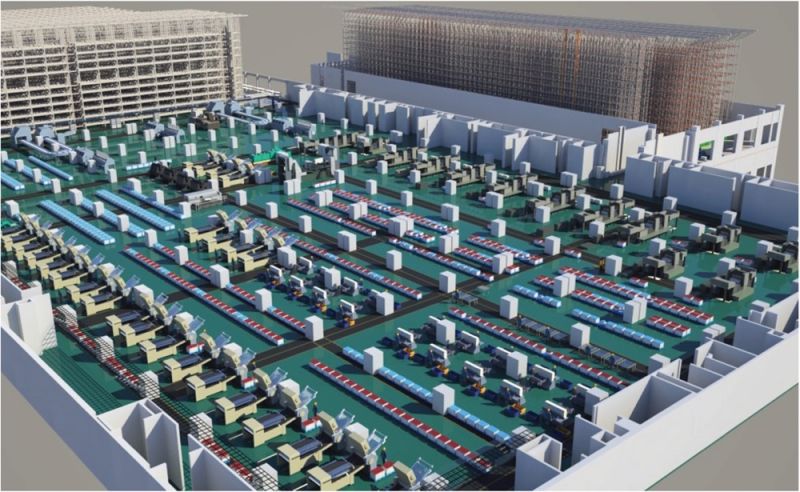
This intelligent factory is composed of an original material warehouse, a production workshop, a finished product warehouse, a shipping and stocking area, and an intelligent scheduling system. This smart factory is composed of a raw material warehouse, production workshops, finished product warehouses, shipping and inventory preparation areas, and an intelligent dispatching system. The raw material warehouse covers an area of over 4,000 square meters and is equipped with a web paper storage area and a flat sheet paper storage area. The web paper storage area mixes and stores four different sizes of web paper, with approximately 10,000 web paper storage positions. Through mixed storage, on the basis of meeting efficiency requirements, Maximize storage within a limited space; The flat sheet paper storage area has nearly 4,000 storage positions for full-open and double-opening pallets. Through automated equipment such as chain conveyors, transporters, and AGVs, the entire process from original materials to the workshop and the return of semi-finished products to the warehouse is fully automated. All materials are digitally managed through WMS.
In terms of material management in the workshop, AGVs are used for material transportation, and WIP is employed for precise management. At the same time, all the automatic paper loading and unloading of production equipment are renovated. This significantly reduces the need for logistics handling and operators, improving the accuracy of material management. Cross-floor material transportation is connected with the AGV system through elevators and coordinated by the information system, greatly enhancing the efficiency and accuracy of transportation, and avoiding the drawbacks of traditional manual forklift and elevator transportation.
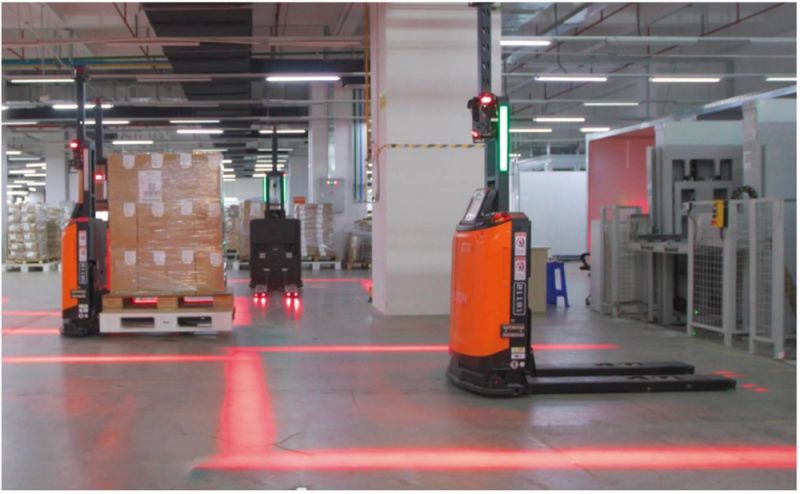
Based on a comprehensive perception, interconnection and digital architecture, the automatic paper feeding system and production equipment are intelligently linked, and AGV achieves efficient material transfer between processes. Through system integration, a production system with full-process automated material handling and data integration is constructed, empowering the production system. This system integrates self-decision-making, self-organization and self-learning capabilities, gradually evolving into a dynamic self-optimizing intelligent manufacturing system.
The data hub builds a global perception and decision-making capability.
Establish a full-chain data platform covering raw material storage, production distribution, and finished product shipment. Integrate core system data such as MES, WMS, and TMS to achieve real-time visualization of equipment status, material turnover, and order execution. Through multi-source data governance, form a standardized indicator system and develop intelligent production scheduling and path optimization algorithm models. The system dynamically analyzes machine condition and logistics equipment operation data, automatically generating the optimal distribution plan, significantly reducing workshop logistics energy consumption and improving space utilization.
(2) Intelligent logistics reconfigures the production material system
① Intelligent Warehousing and Automated Distribution: The raw material warehouse uses digital twin technology for three-dimensional visualization management. Based on the MES system, automatic material requisition instructions are issued, and the AGV and plate chain system are coordinated by uRMS for precise cross-floor distribution. In the second phase, mechanical arm palletizing and AGV cluster scheduling technologies are introduced, significantly enhancing the efficiency of finished product storage operations.
② Pull-based production replenishment: Establish a demand forecasting model driven by work order data. By continuously collecting real-time data on equipment operation and process cycle times, the system dynamically calculates the safety stock threshold. When the raw material inventory reaches the warning value, the system automatically triggers the replenishment instruction and generates the optimal material preparation plan.
(3) Optimize the production process through operational collaboration
① Multi-process collaborative production scheduling: Build a digital main line covering the main process segments. Based on multiple dimensions such as order priority and equipment status, achieve intelligent production scheduling across workshops. Verify the production plan through digital twin technology, effectively improving the overall utilization rate of equipment.
② Human-machine collaborative process reengineering: In the platform scheduling process, the TMS system integrates vehicle positioning and inventory data to generate intelligent loading plans in advance. In the second phase project, visual recognition technology is applied to automatically verify the loading status, significantly reducing the waiting time for vehicles.
③ Cross-departmental collaboration mechanism: Establish a multi-departmental collaboration platform covering production, logistics, and sales. Through a visual dashboard, real-time sharing of key indicators such as order progress and logistics efficiency is achieved, effectively shortening the product delivery cycle.
3. Implementation Results
This intelligent factory project achieves a digital upgrade of the entire production process by establishing a data-driven intelligent production system, integrating the AIMS-MOS manufacturing operation platform and multi-system collaboration. After the project is completed, it is expected to save over 20 million yuan in material costs and over 40 million yuan in labor costs annually, increase per capita output value by 20%, and double the efficiency of picking and matching. The project has successfully created an efficient and agile intelligent manufacturing loop, significantly reducing operating costs and optimizing resource efficiency, providing a replicable benchmark practice for the digital transformation of the discrete manufacturing industry.
V. Conclusion
This article systematically elaborates on the core pain points and innovative solutions in the digital transformation of discrete manufacturing. Aiming at the common problems of data island, resource mismatch and collaboration disconnection in the industry, a "three-in-one" collaboration system based on AIMS-MOS manufacturing operation platform was proposed. The real-time fusion and intelligent decision-making of equipment, material and order data were realized by constructing a global data center. the flexible logistics network is restructured, and AGV cluster scheduling and intelligent warehousing technologies are adopted to improve the efficiency of material turnover; a cross-system collaboration mechanism is established to connect the data flow of the entire production, logistics, and sales chain. Through the practical project of an intelligent factory of a Guangdong packaging group, the effectiveness of the data-driven model in solving the management problems of discrete manufacturing has been verified, providing a replicable technical path and practical paradigm for the industry.
Source: "Logistics Technology and Application"


6F-7F, Building A1, Zhong'an Chuanggu, No. 900 Wangjiang West Road, Shushan District
Postal code:230088
No. 777, Sizhuan Road, Songjiang District
Postal code:201619
Building 1, Yongqi Garden, North Street, Yonglian Town, Nanfeng Town, Zhangjiagang City
Postal code:215600
1st Floor, Building C, Talent Island Technology Industrial Park, Pengjiang District
Postal code:529095
The 9th Tower A, 35th Floor, 33/4, Rama 9 Road, Huai Khwang Sub-District, Huai Khwang, Bangkok, Thailand


Tel